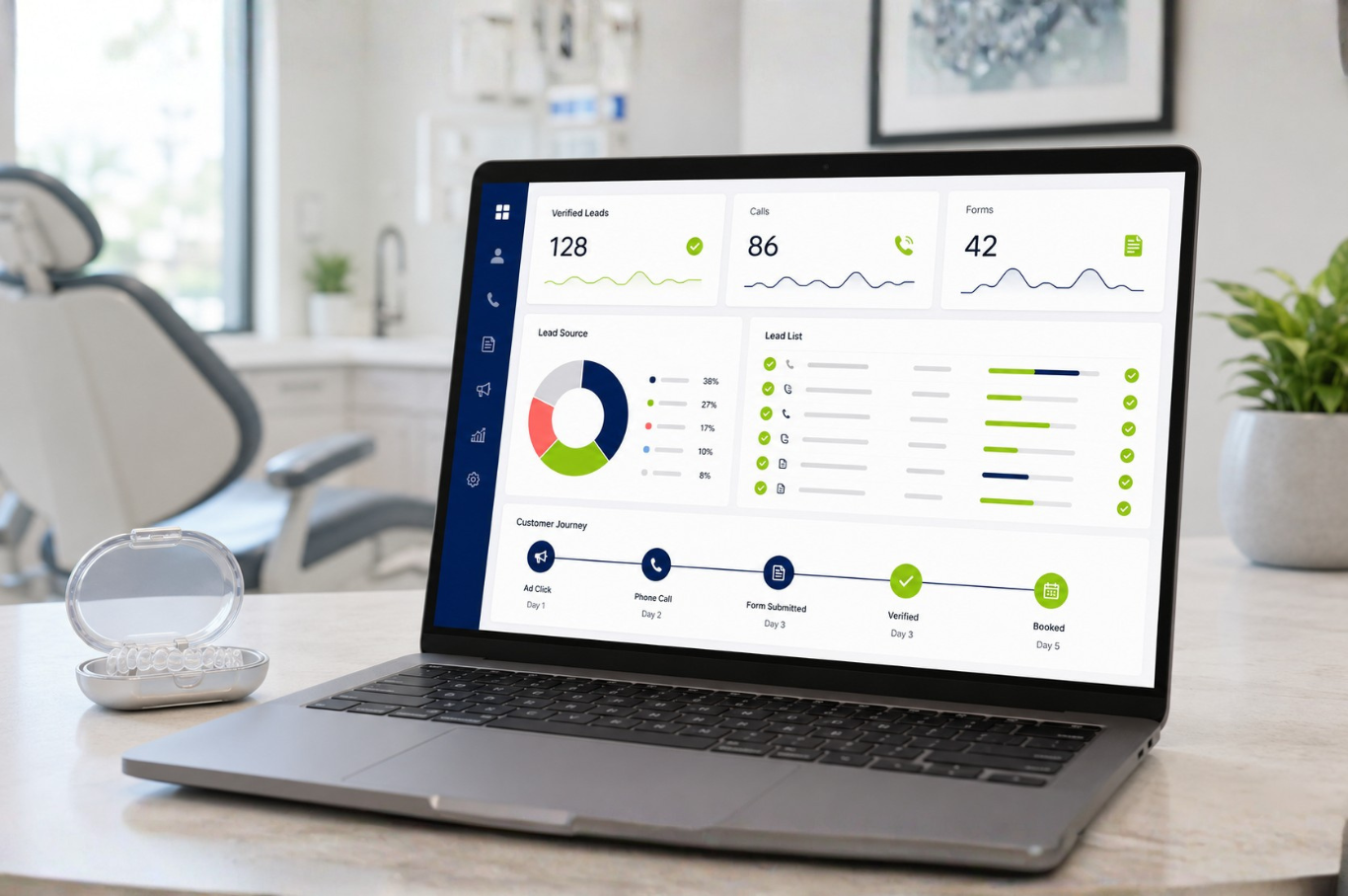


Lime 42® Strategic Roadmap
The Shift in Local Patient Acquisition
Paid Google Search alone is no longer the most cost-effective way to fill your schedule. The practices growing fastest now lead with the channels that produce the majority of patients at little to no cost per patient, and use paid ads as one supporting piece rather than the engine.
The short version
The way patients find a local dental or orthodontic practice has changed, and the economics of paid advertising have changed with it. This document explains what shifted, what it means for your practice, and where your marketing investment produces the most patients per dollar going forward.
The core message: paid Google Search alone is no longer the most cost-effective way to fill your schedule. The practices growing fastest now lead with the channels that produce the majority of patients at little to no cost per patient, and use paid ads as one supporting piece rather than the engine.
1. What changed
Over the past two to three years, the cost to acquire a patient through Google Ads has risen sharply. Braces and dental keywords are among the most expensive in all of advertising, and competition, direct-to-consumer brands, and Google’s move toward automated bidding have pushed costs higher every year.
At the same time, Google search results themselves changed. AI-generated answers and the Google Maps local results now sit above the traditional ads and links, which means the practices that win visibility are increasingly the ones with a strong local presence and reviews, not simply the ones with the largest ad budget.
2. Where patients actually come from now
Here is how the most effective local-acquisition channels compare in 2026, based on independent dental-marketing data:
Relative cost per new patient
Published figure
Described qualitatively, bar length indicative only
Only paid search carries a published dollar figure in the source data. The other three channels are described qualitatively as “lowest” or “very low”, so their bar lengths show relative position, not measured cost. Read the ordering as reliable and the exact lengths as illustrative.
| Channel | Cost per new patient | Notes |
|---|---|---|
| Local SEO / Google Business Profile | Lowest (near-zero per patient once established) | A well-optimized profile with 50+ reviews can capture the majority of new patients from local search |
| Referrals (dentist / pediatric) | Very low | High-trust, high-conversion; historically the backbone of orthodontic practices |
| Patient reactivation / follow-up | Very low | Recovers patients you already paid to reach; near-zero media cost |
| Google Ads (paid search) | $200 – $350+ per start | Still valuable for immediate, high-intent traffic, but the most expensive channel and rising |
The pattern is clear. The cheapest, most durable patients come from your local search presence, your reputation, and your relationships, not from paid ads. Paid ads remain useful for capturing patients the moment they are ready to book, but they work best as one channel in a system, not as the whole system.
3. The roadmap for your practice
We are shifting the emphasis of your marketing toward the channels that produce the most patients per dollar, while keeping paid advertising working in a focused, cost-efficient role. Here is where the effort goes, in priority order:
1. Own your local search presence
- Google Business Profile, fully optimized: complete profile, correct categories, photos, services, and regular posts, so you rank in the Google Maps results where most local searches now land.
- An active review engine: a consistent system for requesting reviews from happy patients. Review count and recency are among the strongest drivers of local ranking, and this is often the single highest-return project a practice can run.
Local SEO on your website: content and structure targeting the specific, high-intent searches patients actually use now, such as treatment-and-city phrases, rather than only broad terms.
2. Stop losing the patients you already pay for
- Answer every call: a large share of patient calls happen outside normal hours or when the front desk is busy. Every missed call is a patient you paid to generate and then lost. Tightening call handling effectively increases your patient volume without increasing spend.
Follow up with unbooked leads and past patients: automated, consistent follow-up recovers people who reached out but did not book, and re-engages past patients, at very low cost.
3. Rebuild referral relationships
- Systematic dentist and pediatric-dentist referrals: these produce high-trust patients who convert well and cost far less than paid search. This channel does not touch your ad budget and is durable.
4. Run paid ads smarter, not bigger
- Focused, high-intent campaigns: tightly themed ad groups, aggressive filtering of junk traffic, and specific decided-intent keywords that cost less than the crowded broad terms, so your capped budget goes further.
Airtight tracking: every call and booking captured and fed back to Google through Lime 42® Tracking, so the budget optimizes toward real patients.
4. The bottom line
Paid Google Ads had a long run as the simplest way to fill a schedule. For practices with capped budgets, that era is ending, not because your practice did anything wrong, but because the cost of the channel outgrew what a fixed budget can support.
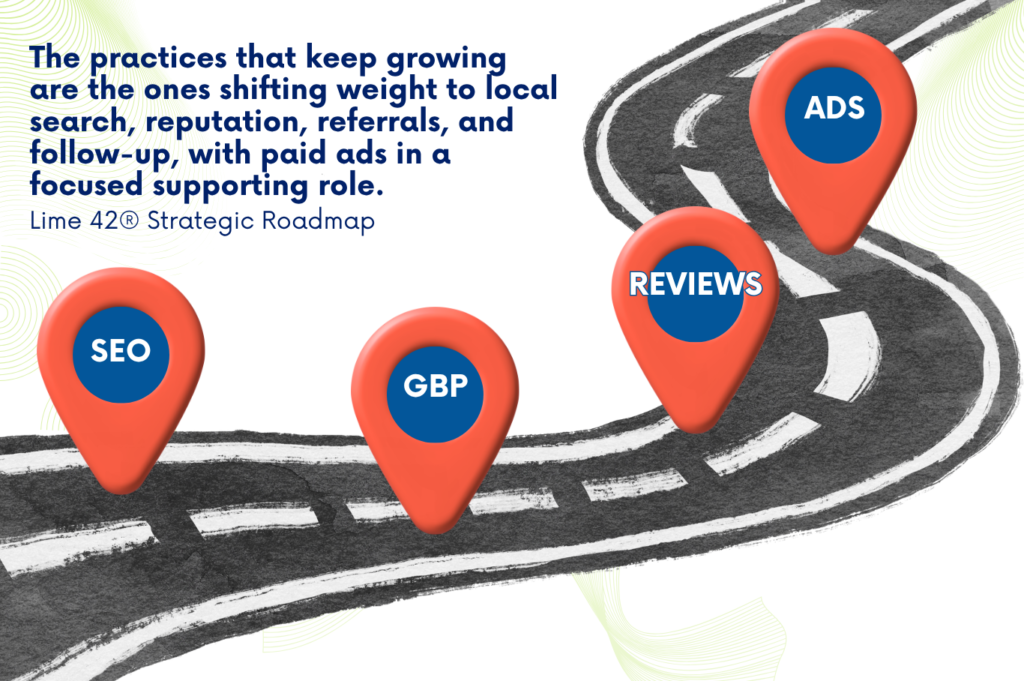
The practices that keep growing are the ones shifting weight to local search, reputation, referrals, and follow-up, with paid ads in a focused supporting role. That is the roadmap, and every piece of it is work we already do for you.
Let us help you set the priorities for your practice
Let us walk through this together and set the priorities for your practice.
Call 760-850-3385 or request a marketing review online.